
The Distracted Driving Epidemic: Enforcing Bulletproof "No-Phone" Policies for Fleet Drivers
As a fleet manager or safety director, you are likely already aware of the baseline risks of distracted driving. Yet, despite years of safety campaigns and regulatory warnings, the problem is not going away—it is intensifying.
Reinforce Your No-Phone Policy Daily
A written strategy is only effective if it stays top-of-mind. Keep compliance sharp and visual reminders clear across your workspace and dispatch terminals.
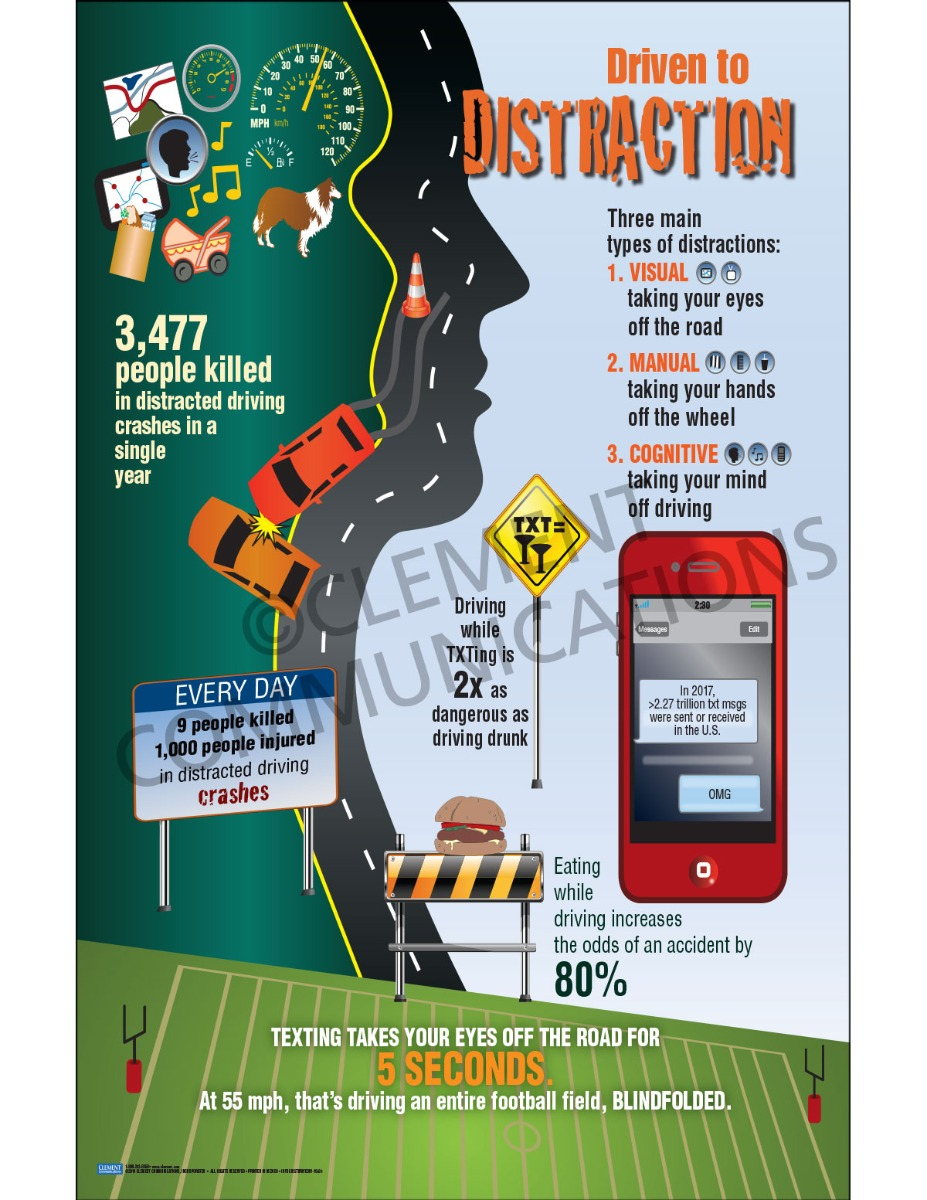
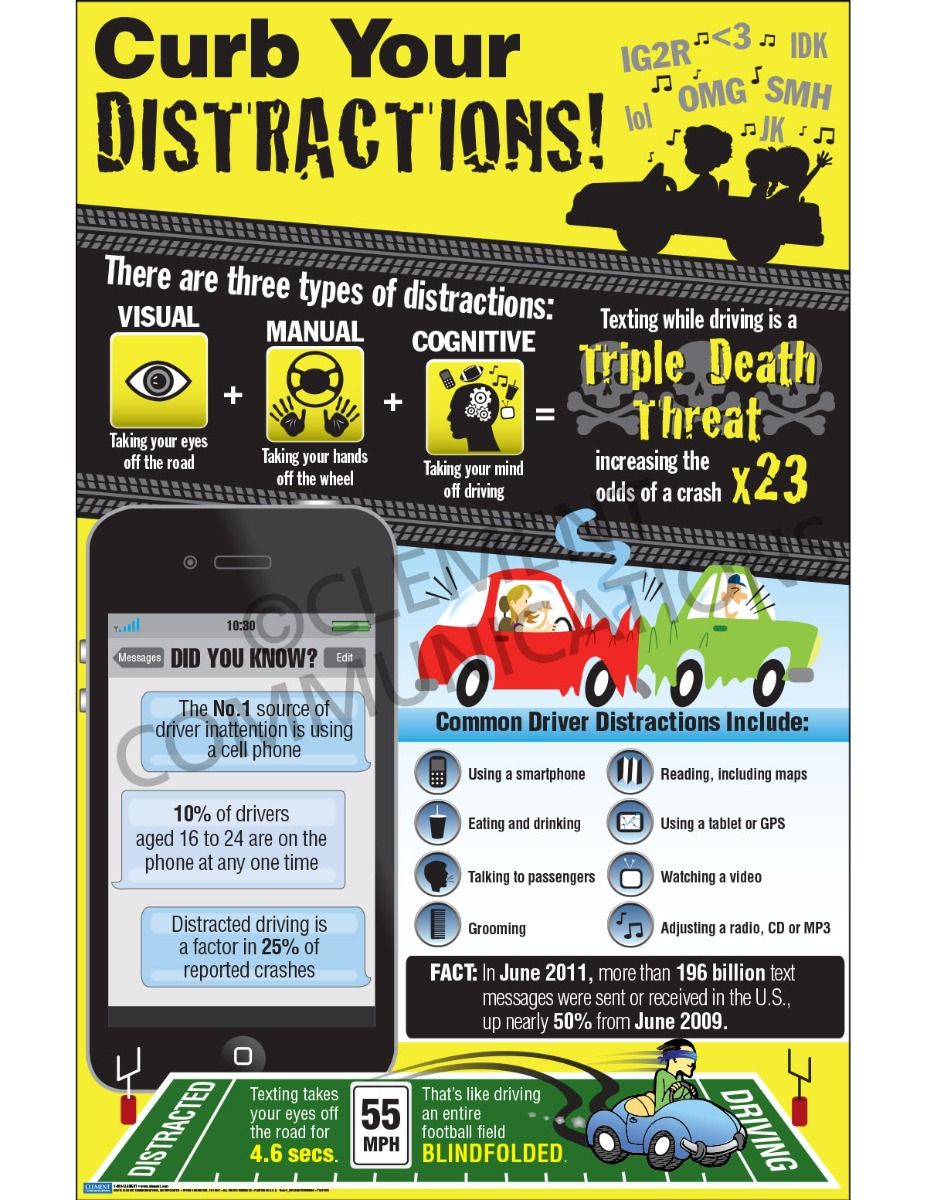
Browse Distracted Driving PostersAccording to data released by the National Highway Traffic Safety Administration (NHTSA), at least 3,208 people were killed and an estimated 315,167 were injured in motor vehicle crashes involving distracted drivers. Furthermore, a joint study by the Governors Highway Safety Association (GHSA) and Cambridge Mobile Telematics revealed that drivers experiencing high levels of phone distraction are 240% more likely to crash than focused drivers.
For commercial fleets, the stakes are exponentially higher. The Federal Motor Carrier Safety Administration (FMCSA) reports that commercial motor vehicle (CMV) drivers who engage in dialing a mobile phone while driving are six times more likely to be involved in a safety-critical event like a crash or near-miss.

Relying on a driver’s "professionalism" or a loosely enforced, paper-only corporate policy is no longer an option. Building a bulletproof "No-Phone" policy requires shifting away from passive trust toward active, tech-driven prevention.
The Evolution of Fleet Distraction
To solve the phone problem, safety leaders must first understand why basic rules fail. Most fleets transition through distinct stages of policy maturity, and understanding where your organization currently sits is the key to minimizing liability exposure:
The human brain is simply not wired to naturally resist the dopamine-driven feedback loops engineered into modern smartphone apps and notifications. Expecting a driver to ignore a vibrating or chiming phone during an eight-hour shift overlooks basic human psychology.
Why Standard Policies Fail in Court
Under FMCSA regulations, the penalties for phone use are severe. Federal rules strictly prohibit CMV drivers from holding a phone, texting, or pressing more than a single button to dial, carrying fines up to $2,750 for drivers and up to $11,000 for employers who allow or require handset use.
From a corporate liability standpoint, executing a strategy centered entirely on "trust" or reactive coaching can backfire in a lawsuit. If a fleet utilizes telematics or inward-facing dash cams that log repeat phone use, but fails to stop the behavior before an accident occurs, plaintiff attorneys will ask a devastating question:
"If you had data proving this driver repeatedly used their phone, why did you let them keep driving?"
Documenting a dangerous behavior without successfully preventing it can establish corporate negligence.
Pillars of a Bulletproof "No-Phone" Strategy
To protect your drivers, the public, and your bottom line, a fleet's mobile device policy should adopt a multi-layered approach centered on immediate prevention and strict accountability.
-
1 Define "Use" Explicitly (Beyond Federal Minimums)
A bulletproof policy must go beyond a basic hand-held ban. While FMCSA guidelines permit hands-free Bluetooth systems if operated via a single button from a seated, belted position, true safety leaders implement stricter boundaries. Your written policy should explicitly clarify:
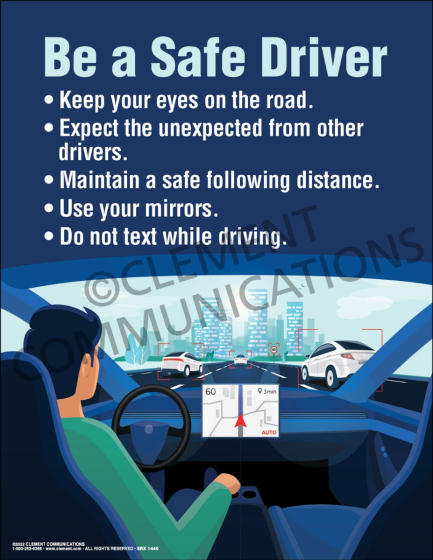
Zero-Tolerance for Screentime: No scrolling, checking navigation mid-route, reading text notifications, or selecting music playlists while the vehicle is in motion or temporarily stopped in traffic.
The "Safe Park" Mandate: Drivers needing to interact with a mobile device must pull over to a safe location where the vehicle can remain completely stationary.
-
2 Remove the Temptation via Technology
The most effective way to eliminate distraction is to remove the physical trigger entirely. Top-performing fleets use distracted driving prevention software—mobile applications or hardware plug-ins that detect when the vehicle is moving and automatically lock out non-essential phone functions.
When a vehicle is in motion, screens are darkened, notifications are suppressed, and unauthorized apps are completely blocked, ensuring the driver's focus remains entirely on the road ahead.
-
3 Implement Continuous, Targeted Interventions
Waiting for an annual Motor Vehicle Record (MVR) pull creates broad visibility gaps where emerging, risky driving patterns pass completely unnoticed. Best practices for fleet safety management include:
Frequent Record Monitoring: Move toward monthly or quarterly MVR checks or subscribe to continuous driver record monitoring services to capture distracted driving citations immediately.
Immediate, Mastery-Based Remediation: If a driver is flagged for a phone-related infraction via telematics or a citation, assign targeted, vehicle-specific safety training within days of the event, rather than waiting for an annual review.
Culture Flows Top-Down
A final, critical component of any corporate policy involves managing internal communication expectations. Dispatchers, operations managers, and supervisors must be explicitly banned from calling or text-messaging drivers during active haul windows. If frontline leadership continuously pressures drivers for immediate text or phone updates regarding delivery timelines, the company actively undermines its own safety culture.
By backing up a strict, written policy with proactive blocking technology, consistent record audits, and supportive operational timelines, fleets can effectively insulate themselves from catastrophic liabilities and bring their drivers home safely every day.
Reinforce Your No-Phone Policy Daily
A written strategy is only effective if it stays top-of-mind. Keep compliance sharp and visual reminders clear across your workspace and dispatch terminals.
Browse Distracted Driving Posters